Local Angles • 8 min read
Bluff Erosion on the Central Coast: Drainage, Terracing & Deep-Root Natives
Bluff erosion is a water problem before it is a soil problem. Here is how drainage, terracing, and deep roots work together to hold ground.
By Kestrel Landscapes · Published February 24, 2026
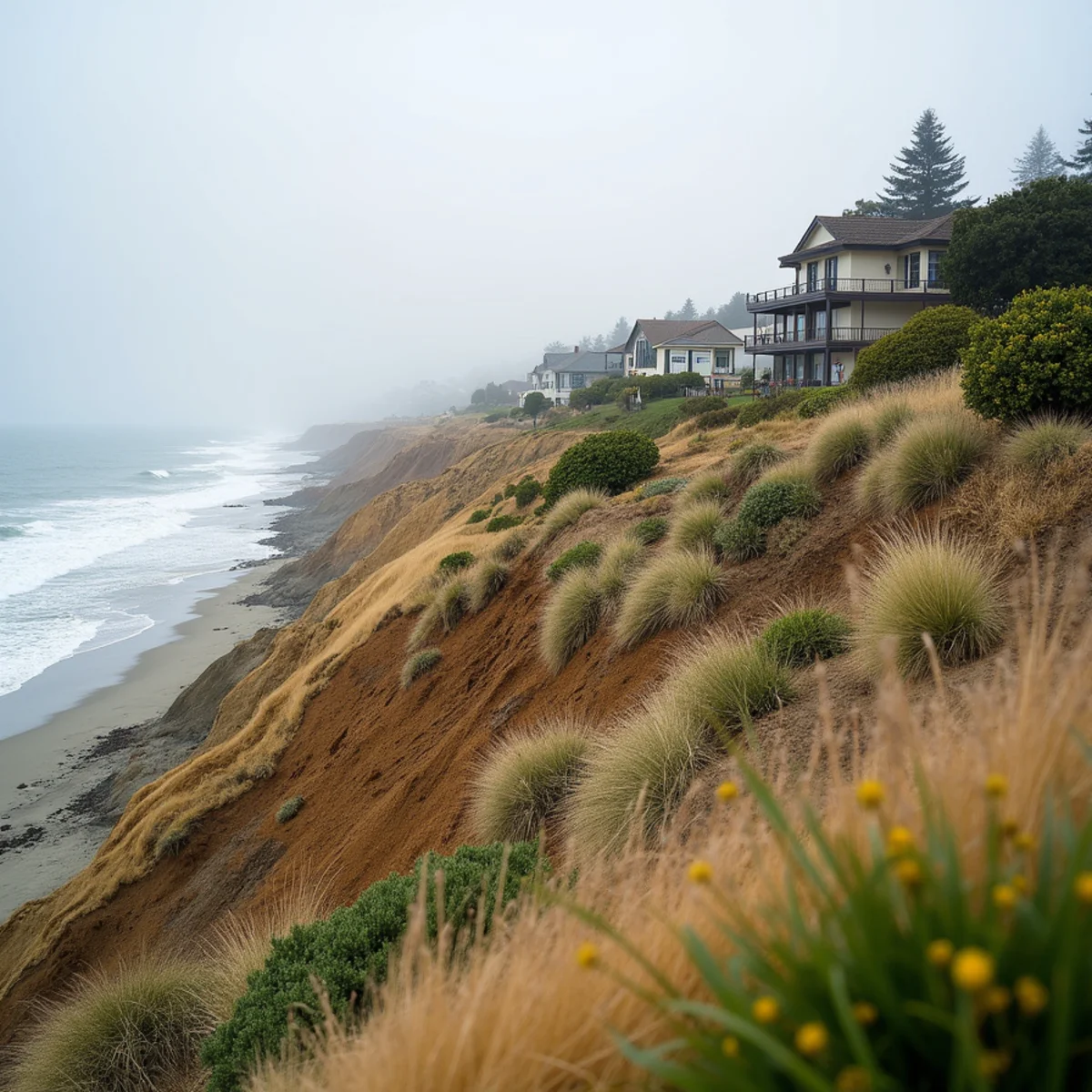
A coastal bluff loses ground in two ways: slowly, as surface soil washes off and roots let go, and suddenly, when a saturated section slumps after a wet winter. If you own property along the bluffs, you have probably watched both happen — a little more edge gone each year, then a bad storm that takes a chunk. The instinct is to fight it with a wall. The reality is that the durable fixes start with water and roots, and a wall alone often makes things worse.
We do a lot of erosion control and slope stabilization work on the bluffs and hillsides between the beach towns, and the projects that hold up all share the same logic. Along the Pismo Beach bluffs in particular, where sandy marine terraces meet steady wind and winter rain, that logic is worth understanding before you spend money on the wrong fix.
Erosion is a water problem first
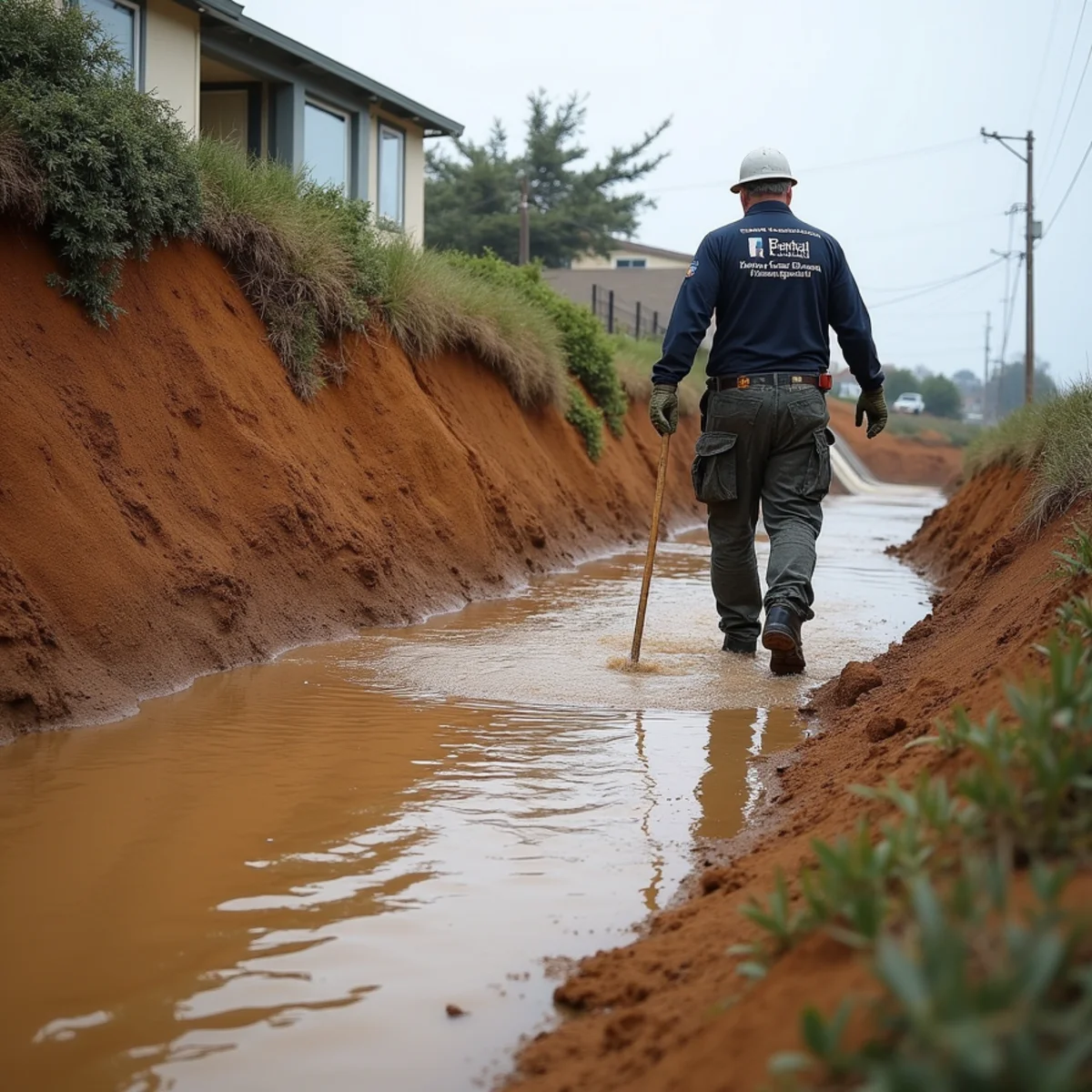
The single biggest driver of bluff failure is water — where it collects, how fast it moves, and how deeply it soaks in. Roof downspouts and paved areas that dump runoff toward the bluff edge concentrate flow that carves channels. Irrigation overspray keeps the top few feet of soil heavy and weak. And a rising water table after heavy rain adds weight and reduces the friction holding a slope together. Before planting anything, we look at where the water is going.
- Redirect downspouts and hardscape runoff away from the bluff edge, ideally to a controlled outlet.
- Intercept surface flow at the top of the slope with a swale or drain so it cannot run over the face.
- Remove irrigation overspray near the edge; drip only, and sparingly.
- Add subsurface drainage where a high water table is loading the slope.
Terracing: breaking one long slope into short ones
A long, steep face sheds water fast and erodes as one big surface. Terracing breaks it into a series of short, gentle steps, each of which slows water, catches sediment, and gives plants a stable shelf to root into. On the Central Coast we build terraces with low retaining walls, boulders, or bioengineered techniques depending on the grade and the look the owner wants. The goal is not to armor the whole bluff but to interrupt the slope so no single stretch is doing all the work.
Terracing pairs naturally with planting. Each terrace holds soil long enough for deep-rooted plants to establish, and once they do, the roots take over much of the holding. Structure buys time; plants provide the permanent hold.
Deep-root natives that actually hold
Shallow-rooted ice plant is everywhere on our bluffs, and it is part of the problem. It forms a heavy, water-holding mat with roots only inches deep — so in a wet winter it slides off in sheets, taking soil with it. The plants that hold are the ones that root deep and lace the soil together. Our coastal natives are built for exactly this:
- Deep-rooted native shrubs like coyote brush, coffeeberry, and lemonade berry that bind the upper soil.
- Native bunchgrasses such as deergrass and purple needlegrass with dense, fibrous root systems.
- Coastal buckwheat and sages that tolerate wind, salt, and lean soil while spreading roots wide.
- Groundcovers that knit the surface without the water-logged weight of ice plant.
These plants also happen to be low-water and fire-aware, which makes them a rare win on every front. Once established, they need little from you and give a lot back to the slope.
How the pieces work together
None of these measures works alone. Drainage without planting leaves bare soil to wash. Planting without drainage puts roots into ground that keeps sliding out from under them. A wall without drainage becomes a dam. The projects that hold combine all three: get the water under control, terrace the slope to slow what remains, and plant deep-rooted natives to lock it in for the long term. If your slope is already saturated and moving after a storm, that is an emergency — our guide to a saturated slope drainage emergency covers the immediate steps.
Bluff work also runs into permitting in the coastal zone, and setbacks and geotechnical review often apply. We plan projects to work within those rules and will tell you honestly when a site needs an engineer's involvement rather than landscaping alone. Verify current coastal and county requirements for your property before you begin.
If you are watching your bluff edge creep closer each winter, do not wait for the storm that takes a chunk. Call Kestrel Landscapes at (323) 606-0255 for a free assessment. We will walk the slope, trace where the water is going, and lay out a plan that holds ground for the long run.
Frequently asked questions
A wall can help at the toe, but without drainage behind it water pressure will eventually undermine or tilt it. Drainage and deep-rooted planting usually have to be part of any lasting fix.
No. Its roots are shallow and its foliage holds a lot of water, so in wet winters it slides off in heavy mats and takes soil with it. Deep-rooted natives hold far better.
Often yes. Coastal-zone setbacks, geotechnical review, and county rules can apply to grading and structures near a bluff. Verify current requirements for your parcel before starting.
Want this handled for your property?
Get a free on-site assessment from a Los Osos design-build crew. Based in Los Osos — most SLO County assessments scheduled within 48 hours.