Emergency Guides • 8 min read
Soggy Slope After an Atmospheric River? Emergency Drainage Steps Before the Next One
A slope that stays soggy after the rain stops is a warning, not a nuisance. Here are the emergency steps to take now and the permanent fixes that keep a Central Coast hillside from letting go.
By Kestrel Landscapes · Published February 3, 2026
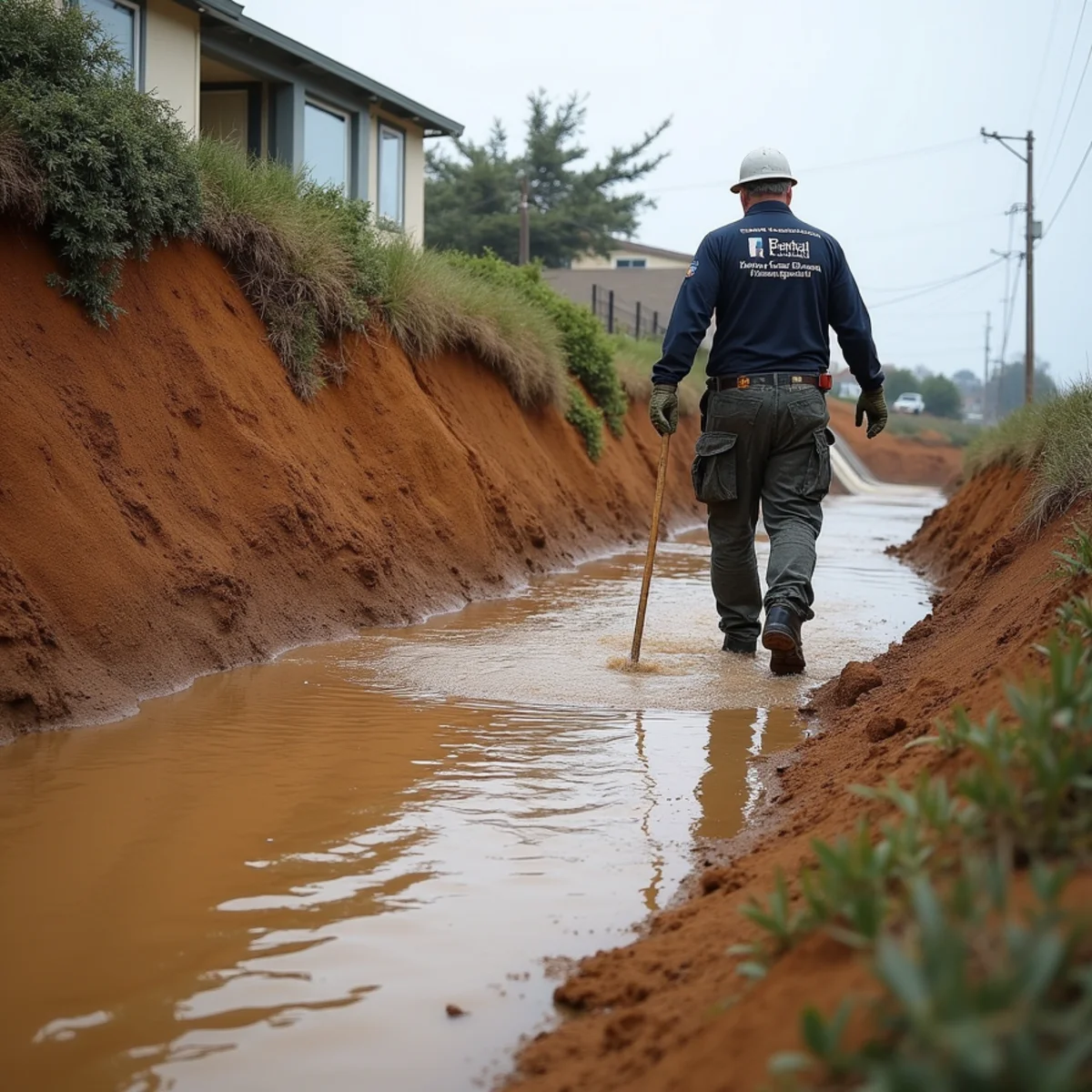
There is a specific kind of dread that comes from walking your backyard slope the morning after an atmospheric river and feeling the ground move under your boot. The soil is beyond wet. It is saturated, heavy, and quietly sliding. On the Central Coast, where hillside homes sit above one another from Shell Beach to Avila, a saturated slope is not a landscaping problem. It is a stability problem, and the clock between storms is short.
This guide covers what to do in the days after a soaking, what to watch for that signals real danger, and the permanent fixes that stop the cycle. If you see a crack opening at the top of a slope, the ground bulging at the bottom, or your patio pulling away from the house, treat it as urgent and call us or a geotechnical engineer right away.
Why Central Coast Slopes Fail After the Rain Stops
Most people assume a slope fails during the heaviest rain. It often fails a day or two later. Water takes time to soak in, and saturated soil is heavier and weaker than dry soil, so the failure lags the storm. This is why the calm morning after a big system is exactly when hillsides give way. Our clay-heavy and sandy-loam soils hold water differently, but both lose strength when they are full.
Step 1: Get Water Off the Slope, Not Into It
The first job is to stop adding water. Walk the top of the slope and find every place where runoff pours over the edge: a downspout aimed at the hill, a driveway that sheets water toward it, a neighbor's yard draining onto yours. Every one of those is loading the slope. Redirect what you safely can. Extend downspouts away from the crest, and clear any existing swale or drain so it actually carries water to a safe outlet.
- Extend downspout outlets well past the top of the slope, never over it.
- Clear leaves and mud from swales, catch basins, and drain grates.
- Cover bare, eroding soil with straw wattles or erosion blanket to slow surface flow.
- Do not water landscaping on or above the slope until it dries out.
These are stopgaps. They buy you time and reduce the load, but a slope that is failing needs engineered drainage, not just a longer downspout. That is where our drainage and grading solutions come in, because the real fix is moving subsurface and surface water off the hill through a designed system rather than hoping it drains on its own.
Step 2: Understand the Two Kinds of Water You Are Fighting
Surface water is what you see: runoff sheeting down the face. Subsurface water is what you do not: water moving through the soil itself, building pressure behind walls and inside the slope. Both cause failures, and they need different tools. Surface water is handled with grading, swales, and catch basins. Subsurface water needs a French drain or a curtain drain that intercepts the flow underground and pipes it out to daylight.
A retaining wall without proper drainage behind it is a common failure point. When the soil behind a wall saturates, it exerts enormous hydrostatic pressure, and walls that were never weeped or backed with gravel and pipe blow out. If your wall is leaning, weeping mud from its face, or showing new cracks, the drainage behind it has failed and the wall is next.
Step 3: Stabilize the Soil, Not Just the Water
Once the water is under control, the slope itself needs to hold. Bare soil erodes; planted soil binds. Deep-rooted, drought-tolerant natives are the long game here, because their roots knit the top few feet of soil into something that resists sliding. In the short term, erosion blankets and wattles hold the surface while plants establish. For steeper or more critical slopes, terracing and retaining structures do the heavy lifting.
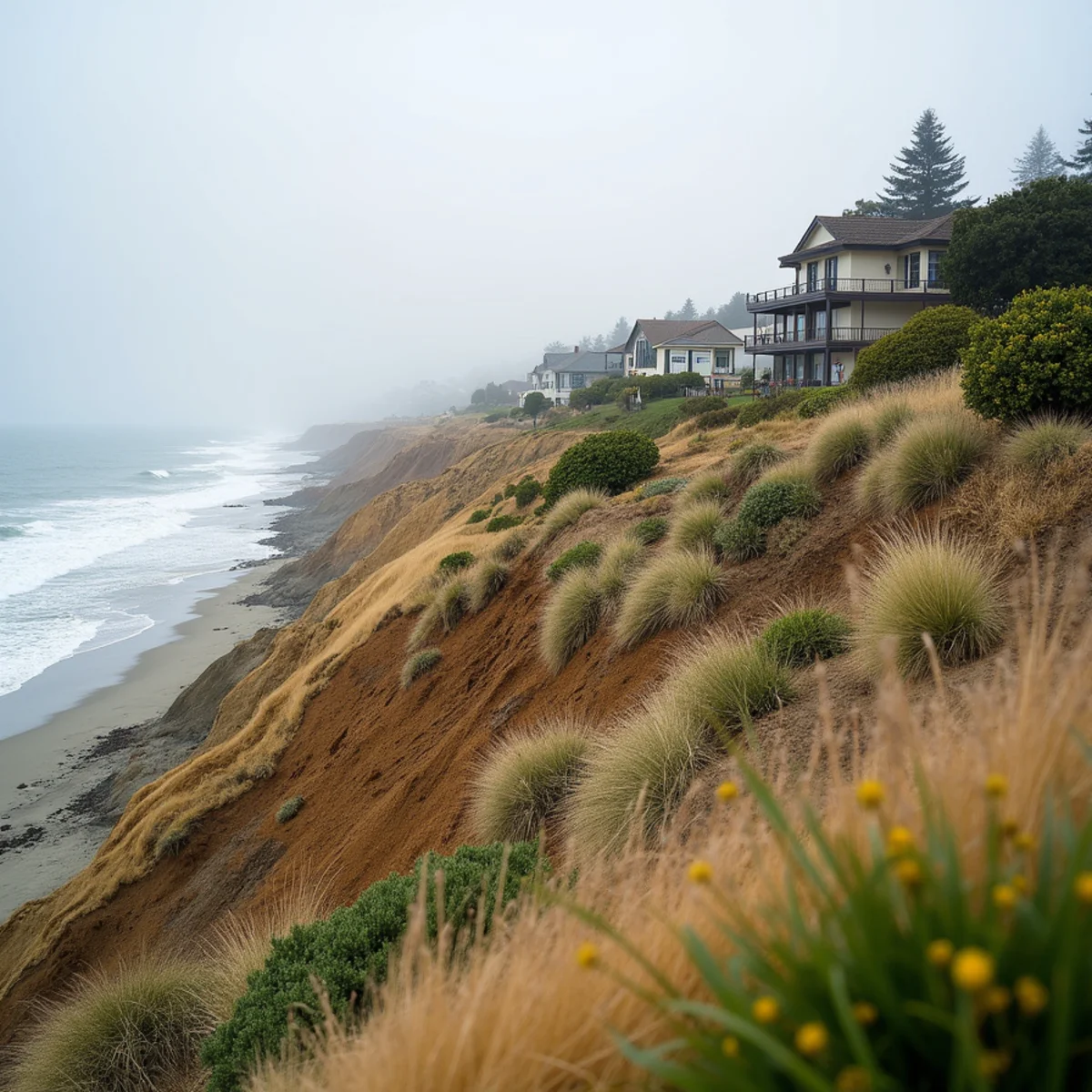
This combination of drainage and planting is the heart of our erosion control and slope stabilization work. We match the fix to the slope, because a gentle backyard grade and a steep coastal bluff are entirely different problems. Homeowners in the Shell Beach area know this firsthand, where the mix of steep lots and ocean-facing exposure puts real pressure on every hillside during a wet winter, and if your property sits on a coastal edge our guide on bluff erosion control on the Central Coast goes deeper on that specific risk.
Step 4: Plan the Permanent Fix Between Storms
The worst time to fix a slope is during a storm, when the ground is unworkable and every contractor is booked. The best time is the dry window that follows. Use it. A permanent fix usually combines three elements: drainage to move water off and out of the slope, structure such as walls or terraces where the grade is steep, and planting to bind the surface. Done together, they break the cycle of soggy slope, erosion, and worry.
If your hillside stayed wet long after the last storm cleared, do not wait for it to prove how serious it is. We assess slopes across San Luis Obispo County and can tell you whether you are looking at a simple drainage correction or something that needs an engineer. Call Kestrel Landscapes at (323) 606-0255 for a free assessment while the ground is still dry enough to work.
Frequently asked questions
A slope that stays saturated long after the rain stops usually means water is not draining properly, either because the soil is holding it or subsurface water is feeding it. That is a signal to get drainage assessed before the next storm loads it further.
Planting helps bind surface soil, but it will not fix a slope that has a water problem. Deep-rooted natives are part of the solution, paired with drainage to move water off and out of the hill. Planting alone on a saturated, failing slope is not enough.
A swale is a shallow surface channel that carries runoff you can see. A French drain is a buried, gravel-wrapped perforated pipe that intercepts water moving through the soil underground. Saturated slopes usually need the subsurface drainage a French drain provides.
Want this handled for your property?
Get a free on-site assessment from a Los Osos design-build crew. Based in Los Osos — most SLO County assessments scheduled within 48 hours.