Emergency Guides • 7 min read
Storm Debris Everywhere? The Central Coast Post-Storm Yard Cleanup Checklist
After a Central Coast storm, work through this safety-first checklist before you touch a single branch. Here is what to clear, what to leave for a pro, and how to protect your yard before the next system.
By Kestrel Landscapes · Published January 20, 2026
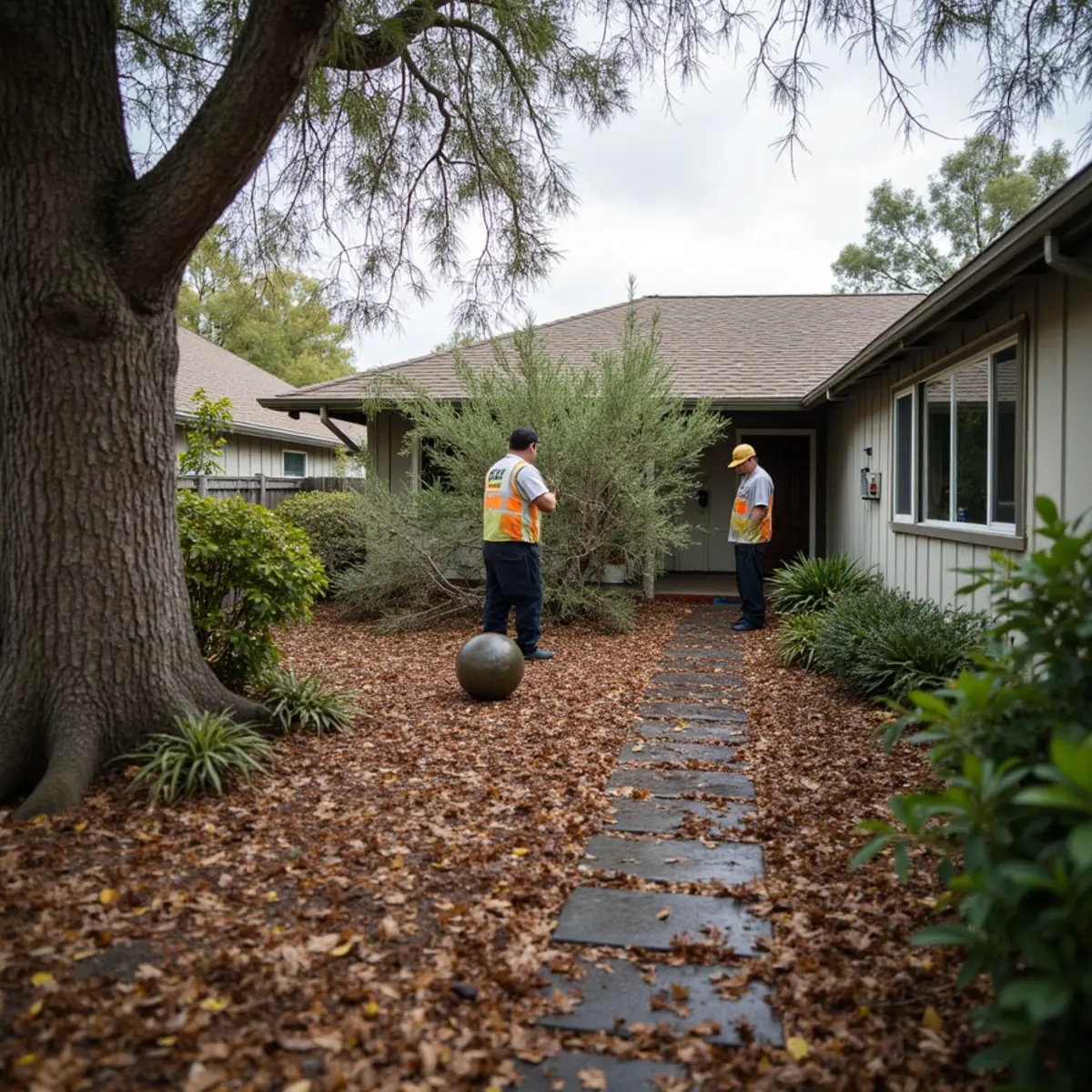
When a winter storm rolls off the Pacific and stalls over San Luis Obispo County, it does not leave quietly. Eucalyptus limbs come down across driveways, pine needles pack the gutters, and the wind lays down fence panels like dominoes. The morning after, the instinct is to grab a chainsaw and start cutting. That instinct is how people get hurt.
We have cleared enough post-storm yards from Los Osos to Paso Robles to know that the order you do things in matters as much as the work itself. This checklist walks you through a safe cleanup, top to bottom, and flags the moments where a call to a pro is the smarter, cheaper move. If a tree is already leaning on your house or a line, skip the reading and get help. For everything else, start here.
Step 1: Look Up and Look Down Before You Step Outside
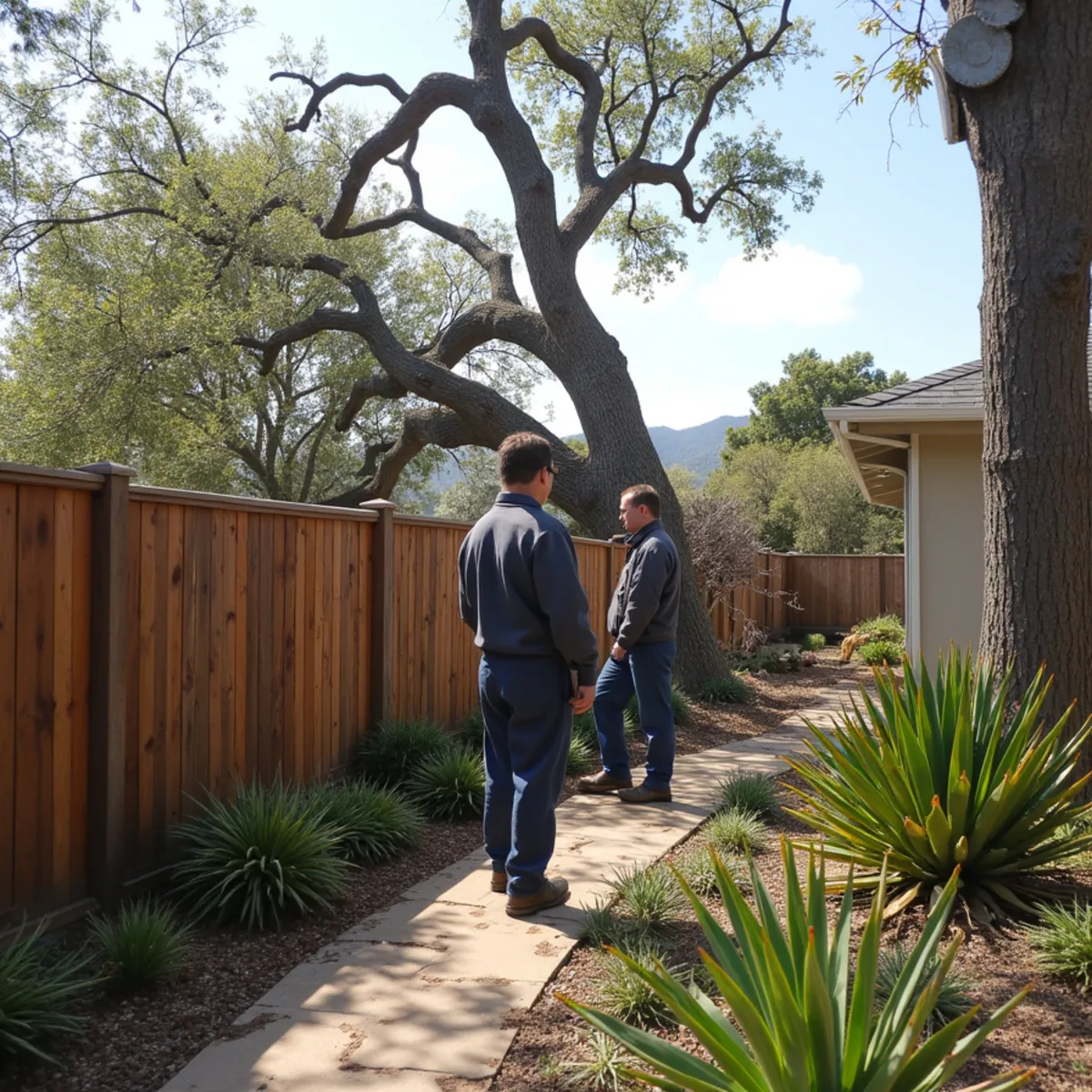
The most dangerous storm debris is the debris you cannot see clearly. Before anyone walks the yard, stand at the door and scan overhead for hangers, the broken limbs still caught in a canopy that have not fallen yet. A gust or a bump can drop them without warning. Then scan the ground for anything touching a downed power line. If you see a line on the ground or draped across a fence, treat it as live, keep everyone back at least 35 feet, and call PG&E and 911. No branch is worth that risk.
Step 2: Clear Access and Drainage First
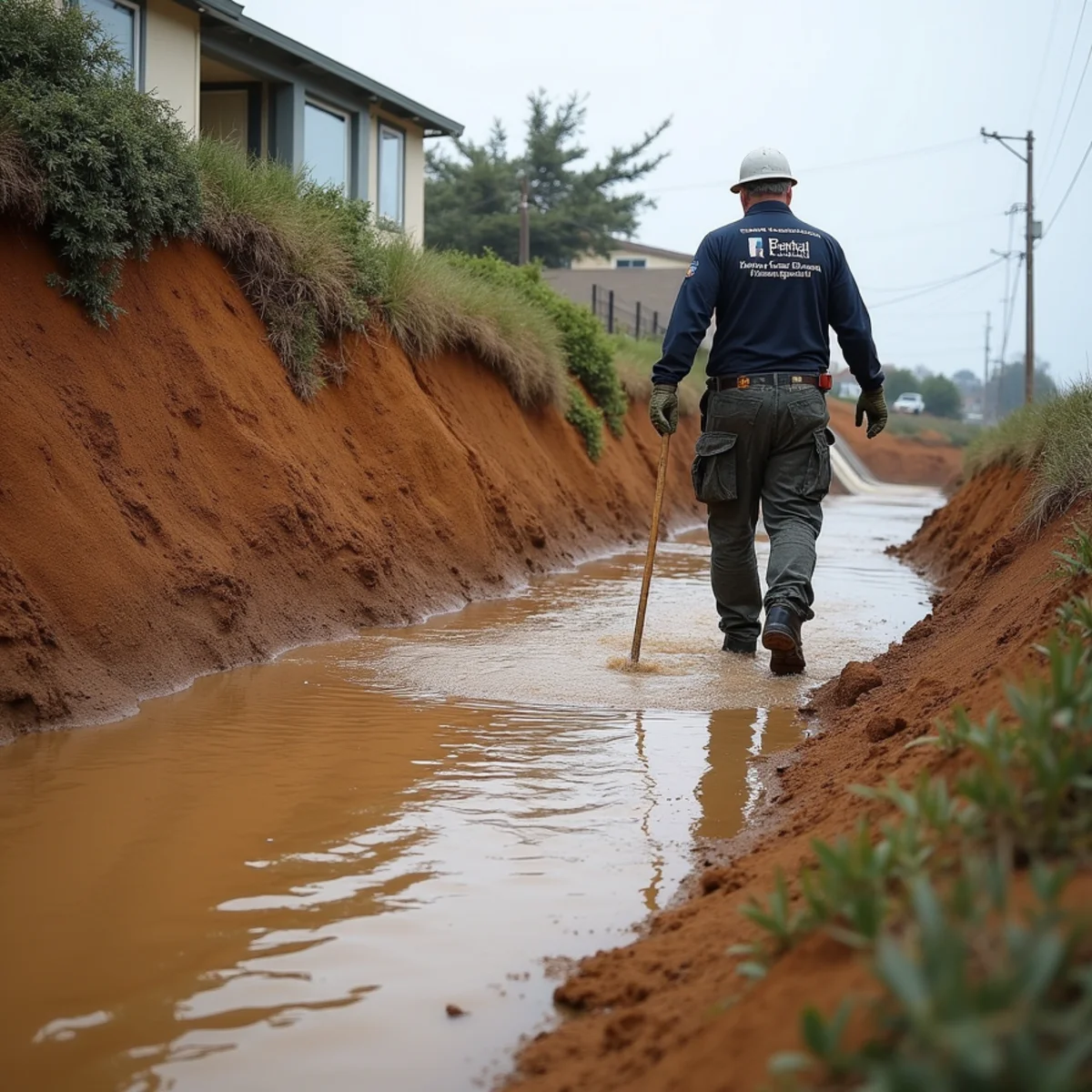
Once the yard is safe to enter, resist the urge to start with the biggest, most satisfying pile. Start with the two things that prevent the next round of damage: access and water. Clear a walkable path from the house to the street and to your utility shutoffs. Then find where water is meant to go and get it moving again. On the Central Coast, back-to-back atmospheric rivers are common, and a drain choked with leaf litter turns a second storm into a flood.
- Rake debris off storm drains, area drains, and swales so water can move.
- Clear gutters and downspout outlets, which fill fast under eucalyptus and Monterey pine.
- Check that downspouts still carry water away from the foundation, not toward it.
- Photograph any damage before you move things, in case you file an insurance claim.
If you find water pooling against the house or sheeting down a slope, that is a drainage problem the storm exposed, not created. It is worth addressing before spring. Our team handles that kind of correction through our drainage and grading work, and the fix is almost always cheaper than the water damage it prevents.
Step 3: Sort the Debris Into Three Piles
Sorting as you go saves a second handling later and makes disposal far cheaper. Set up three staging areas and put every piece where it belongs the first time you pick it up.
- Green waste: leaves, small branches under four inches, and soft plant material for your green bin or a municipal drop-off.
- Wood: larger limbs and trunk sections, which you can cut to firewood length or set aside for haul-off.
- Trash and hazards: shattered fencing, broken pots, plastic, and anything with nails or hardware.
IWMA and local haulers across the county take green waste, but volumes after a big storm can exceed what your bins hold for weeks. When the pile is bigger than a few bins, a single professional haul is usually less expensive than the fuel and dump runs you would spend doing it yourself, and it clears the yard in an afternoon. That is the core of our storm cleanup and debris removal service for homeowners who would rather not spend a weekend on it.
Step 4: Handle Downed Trees the Right Way
A tree on the ground looks harmless. It is not. Trunks and limbs under a storm load hold tension, and cutting in the wrong place releases that energy fast. This is where most weekend chainsaw injuries happen. If a trunk is bent, pinned, or holding weight, that is a stop-and-call moment. A small branch you can cut with a handsaw while both feet are planted is fine; a six-inch limb sprung under load is not a DIY cut.
Homeowners in our Los Osos service area deal with this constantly because of the mature eucalyptus and cypress that define the bay. Those species drop heavy, brittle limbs, and they do it in wind. If you are staring at a large downed tree, note where the stump and root plate are before anything gets moved, because a partially uprooted tree can spring back upright.
Step 5: Protect the Yard Before the Next Storm
Cleanup is only half the job. The window between storms is the right time to fix what failed. If a fence blew over, the posts likely rotted or the footings were undersized for our wind. If a slope sloughed mud, the soil is telling you it needs cover and structure. Addressing these now, while access is clear and the ground is still soft, costs less than an emergency call during the next system. If your winter has been rough on more than the yard, our guide on whether insurance covers storm-damaged landscaping is worth a read before you pay out of pocket.
A post-storm yard is overwhelming, but it is manageable when you work in the right order: safety, access, drainage, sorting, then trees. If the pile is bigger than a weekend or a downed tree has you nervous, we clear storm debris across San Luis Obispo County and can be out to assess it quickly. Call Kestrel Landscapes at (323) 606-0255 for a free assessment, and we will tell you honestly what you can handle and what you should not.
Frequently asked questions
Clear drains and safe walkways within a day or two to prevent a second storm from flooding. Larger debris and downed trees can wait until conditions are safe, but do not let green waste sit for weeks where it can smother plants or clog drainage.
Your green bin takes routine green waste, but a major storm usually produces far more than the bins hold. Many Central Coast haulers offer extra pickups or drop-off events after big storms, and a single professional haul is often cheaper than repeated dump runs.
Call a pro for any tree touching a power line, any limb caught high in a canopy, and any trunk that is bent, pinned, or holding weight. These release stored energy when cut and are the leading cause of DIY chainsaw injuries.
Want this handled for your property?
Get a free on-site assessment from a Los Osos design-build crew. Based in Los Osos — most SLO County assessments scheduled within 48 hours.