Erosion control in Los Osos starts with water: most slope failures are a drainage problem before they're a soil problem. Kestrel Landscapes stabilizes hillsides and bluffs from Los Osos to Big Sur by controlling where runoff goes first, adding terracing or retaining where the grade demands it, and establishing deep-rooted natives that knit the soil together.
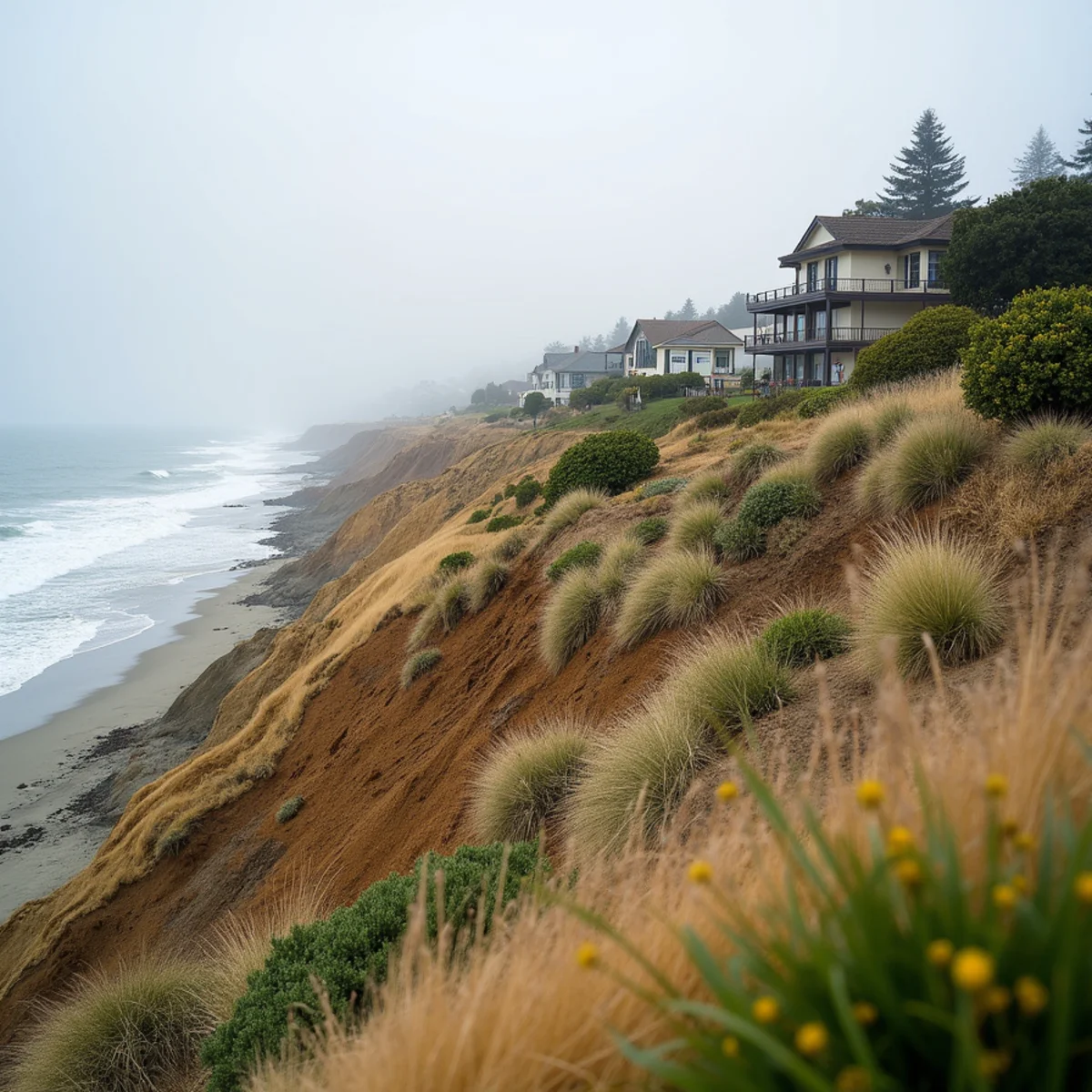
Central Coast slopes move when water gets into them. A wet winter, a bluff-top lot, a decomposed-granite hillside above a lake — and suddenly soil is sheeting downhill, undercutting a patio or threatening a foundation. The fix is almost never one thing; it's water management plus mechanical stabilization plus the right roots in the ground.
Kestrel Landscapes stabilizes slopes and bluffs from Los Osos out to Big Sur. We start by controlling where the water goes, add retaining and terracing where the grade demands it, and plant deep-rooted natives that knit the soil together for the long term.
Signs a slope needs attention
Don't wait past these:
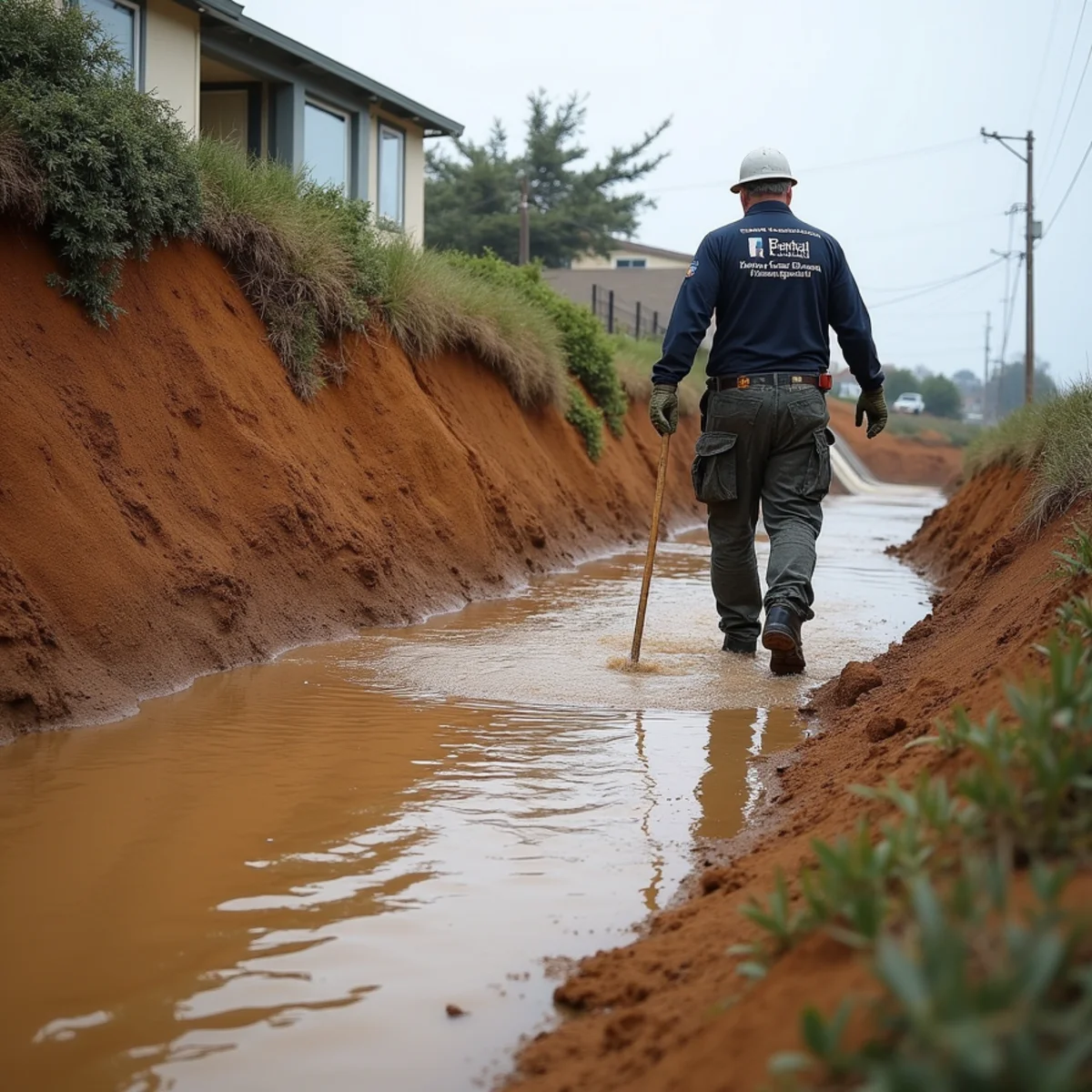
Rills, gullies or bare washed-out channels after rain
Soil or mud sheeting onto a patio, path or driveway
A bluff edge or hillside creeping toward a structure
A failed or bulging old retaining wall
Bare decomposed-granite slopes shedding material downhill
Drainage & water control
Most erosion is a water problem first. We intercept and route runoff with swales, drains and dry creek beds so water stops carving the slope — the single most important step in any stabilization plan.
Terracing & retaining
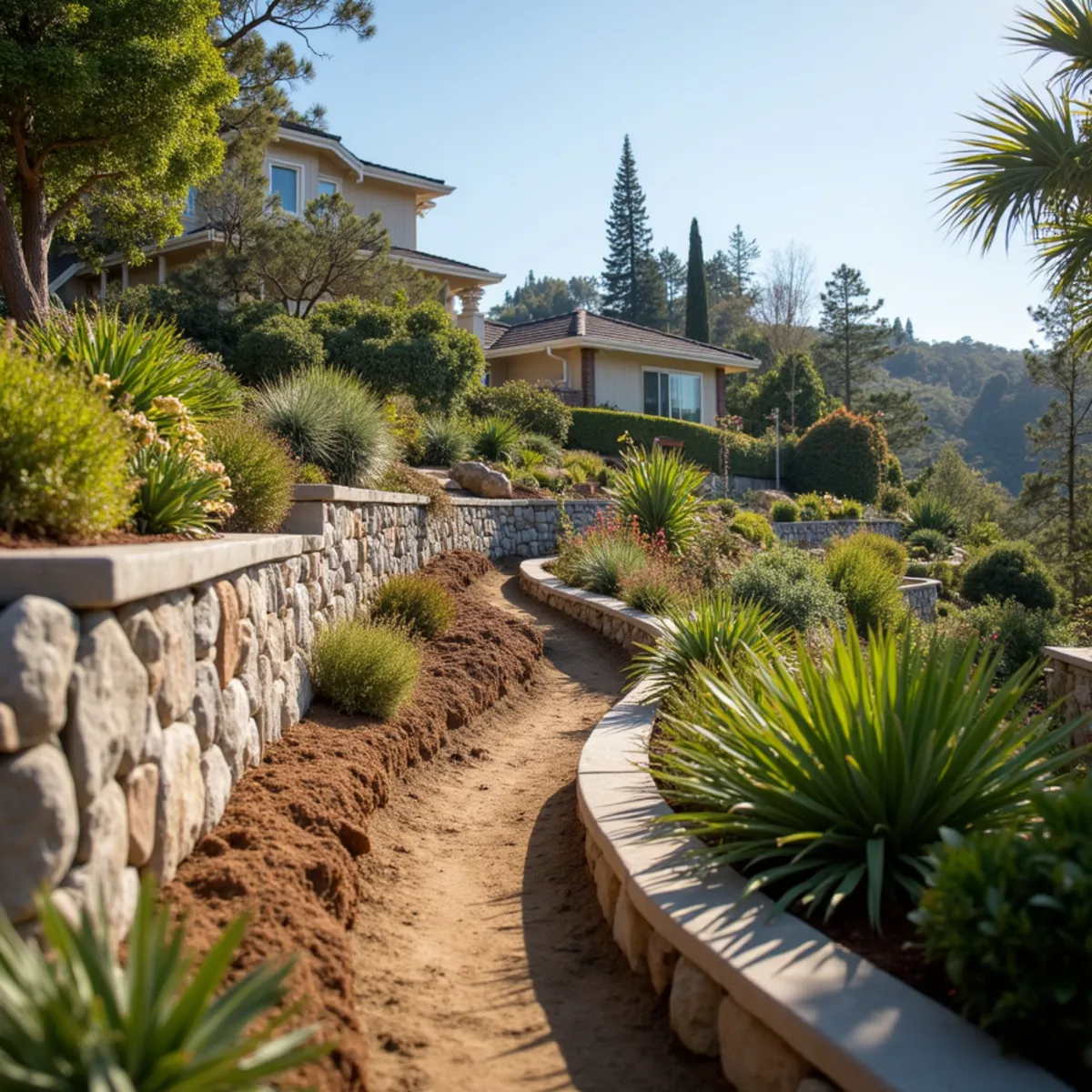
Where the grade is too steep to hold, we build terraces and retaining walls that break the slope into stable, usable, planted steps — engineered and drained so they don't become the next failure.
Deep-root native planting
Plants are the long-term glue. We establish deep-rooted native shrubs, grasses and groundcovers matched to the exposure that lock the soil in place and keep looking like landscape, not riprap.
Our process
1
Assess the failure
We identify where water enters, moves and exits, and what's already moving.
2
Control the water
Drainage, swales and dry creek beds are designed to take runoff off the slope.
3
Stabilize mechanically
Terracing, retaining and erosion-control fabric go in where the grade requires it.
4
Plant deep roots
We establish deep-rooted natives and groundcovers to bind the soil for the long term.
5
Monitor
We check performance after the first heavy rains and adjust as needed.
Get your erosion control estimate
Get a free on-site assessment and a written scope — Based in Los Osos — most SLO County assessments scheduled within 48 hours.
Slope work is highly site-specific — priced by the extent of drainage, the height and length of any walls or terracing, and access. Small planted-swale fixes are modest; engineered bluff stabilization is a major project.
Slope height, length and steepness
Drainage and water-control scope
Retaining walls and terracing
Erosion-control fabric and materials
Plant establishment
Access and equipment reach
Note: Serious bluff and structural slope failures may need a civil or geotechnical engineer — we'll tell you when a project is beyond a landscape scope.
Why choose Kestrel Landscapes for erosion control
Water first, roots second
We intercept and route runoff with swales, drains and dry creek beds before anything else — the single most important step in any stabilization plan.
The right mix of methods
Drainage, terracing, retaining and deep-rooted native planting combined to fit the slope, rather than one product sold as a cure-all.
Engineered and drained walls
Where the grade calls for retaining, walls are built and drained properly so the wall itself doesn't become the next failure.
Honest about limits
Active structural bluff failure near a foundation can need a geotechnical engineer — we tell you when a job is beyond a landscape scope and refer it.
Erosion Control FAQs
Almost always uncontrolled water — runoff concentrating and carving channels — combined with bare or shallow-rooted soil. We fix the water path first, then stabilize mechanically and with deep-rooted plants; treating only the surface never lasts.
Yes, where the grade calls for it. Terraces and retaining walls turn a failing slope into stable planted steps. We engineer and drain them properly so the wall itself doesn't become the next problem.
Deep-rooted natives — certain ceanothus, coyote brush, native grasses and groundcovers — knit slope soil together while tolerating our climate. We match species to the slope's sun, wind and soil.
Landscape-scale bluff work — drainage, planting, terracing — yes. But active structural bluff failure near a foundation can require a geotechnical engineer. We assess honestly and refer when the situation calls for it.
Before the winter rains — late summer through early fall is ideal, so drainage and deep-rooted planting are in place and beginning to establish before the first big storms. That said, if a slope is actively failing, don't wait for the calendar; call us and we'll assess it right away.
A slope that stays soggy after the rain stops is a warning, not a nuisance. Here are the emergency steps to take now and the permanent fixes that keep a Central Coast hillside from letting go.
Feb 3, 2026
Ready for a landscape that works?
Get a free on-site assessment and a written scope — Based in Los Osos — most SLO County assessments scheduled within 48 hours.