Problem-Solving • 7 min read
Decomposed Granite vs. Mulch: Which Ground Cover Wins on the Central Coast?
Decomposed granite and mulch both cover bare ground, but they solve different problems. Here is a straight comparison on cost, upkeep, and use so you pick the right one for each part of your yard.
By Kestrel Landscapes · Published May 26, 2026
Once the lawn comes out, you are left with bare soil and a decision: what covers the ground now? On the Central Coast, the two workhorses are decomposed granite and mulch. Both suppress weeds, both fit a water-wise landscape, and both are far cheaper than paving. But they are not interchangeable. They solve different problems, and using the wrong one in the wrong spot is a common and avoidable mistake.
This is a straight, no-spin comparison. We install both, constantly, and the honest answer to which is better is that it depends entirely on what you are covering and why. Here is how to decide.
What Each One Actually Is
Decomposed granite, usually called DG, is finely crushed granite that compacts into a firm, stable surface. It comes loose or stabilized with a binder that locks it into a nearly solid path. It is a mineral surface: it does not break down, it does not feed the soil, and it is meant to be walked on. Mulch is organic material, typically shredded bark or wood chips, spread over soil. It is a living-system product: it breaks down over time, feeds the soil, holds moisture, and is meant to protect planting beds, not to be a walking surface.
Cost, Upfront and Over Time
Mulch is cheaper to install. It is lighter, spreads fast, and needs no compaction. But it breaks down, and that is the catch: organic mulch decomposes and thins out, so you top it up every year or two, and that recurring cost adds up over a decade. DG costs more upfront because it is heavier to haul, and stabilized DG needs proper base prep and compaction to last. But a well-installed DG path holds for many years with only occasional refreshing, so its cost is more front-loaded than recurring.
- Mulch: lower upfront cost, but re-applied every one to two years as it breaks down.
- DG: higher upfront cost, especially stabilized, but long-lived with minimal topping up.
- Both are dramatically cheaper than pavers or concrete for covering large areas.
Maintenance and How They Behave
Mulch quietly improves your soil as it decomposes, which is a real benefit around plants, but it also floats. Heavy Central Coast winter rain will wash mulch off slopes and out of beds if it is not contained, and it can pile against stems if applied too thick. DG stays put better once compacted, but loose DG tracks into the house on shoes, and even stabilized DG can develop ruts or shed fines in a downpour if the base and drainage were not done right. Neither is truly zero-maintenance; they just fail in different ways.
The Slope and Drainage Factor
On any slope, both need thought. Mulch on a slope wants to wash away and usually needs a coarser, chunkier grade and sometimes netting to hold. DG on a slope needs proper compaction and often edging or steps to keep it from sheeting downhill in a storm. Properties around Lake Nacimiento see real seasonal swings, wet winters and hot dry summers, and that swing punishes ground cover that was installed without accounting for drainage. In our Oak Shores and Lake Nacimiento service area, getting the base and edging right is what separates a path that lasts from one that erodes in the first wet year.
Where Each One Wins
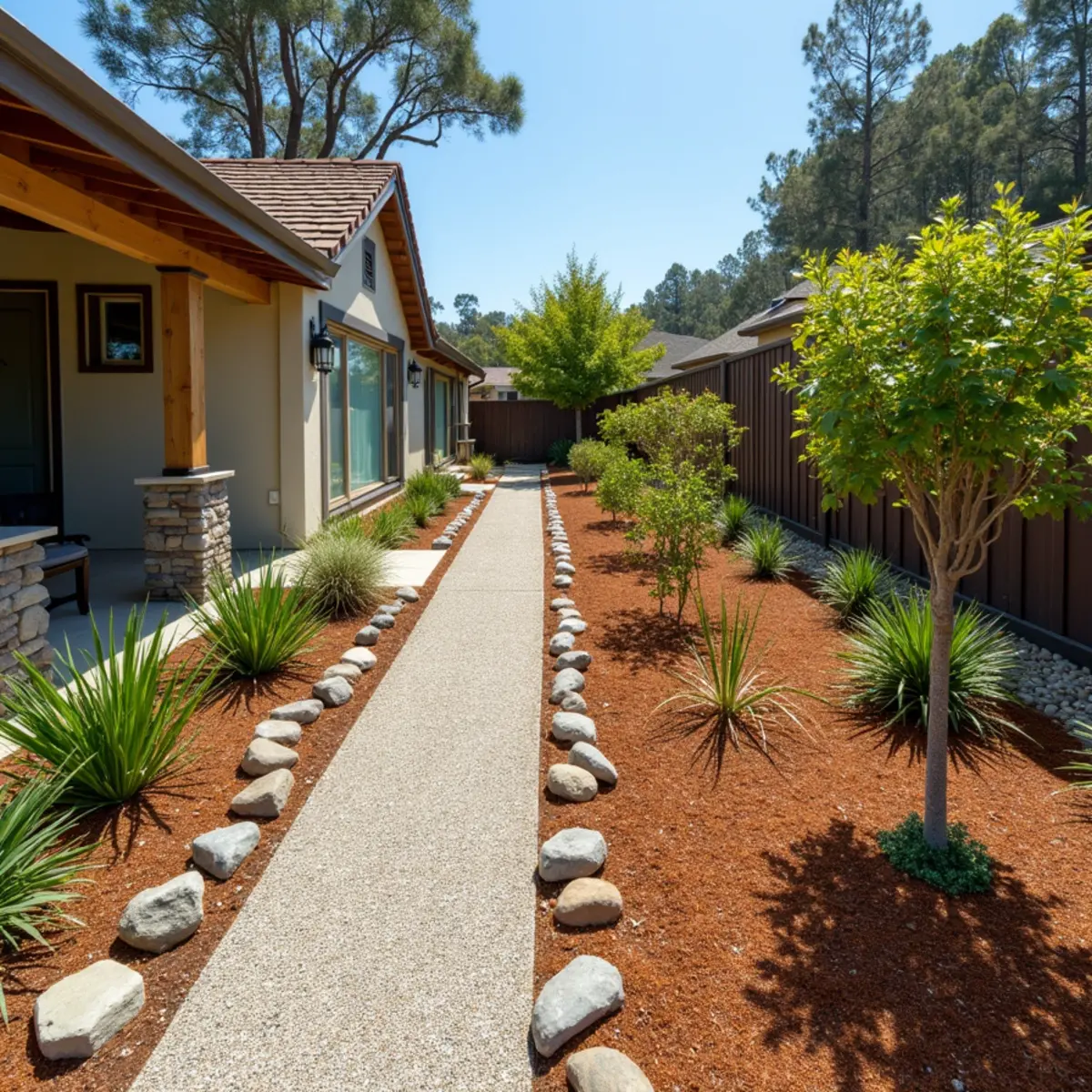
Here is the practical breakdown. Reach for DG when you need a usable surface: pathways, patios on a budget, seating areas, dog runs, and the walking spine of a garden. It gives you a clean, firm, natural-looking surface at a fraction of paver cost, and for a more permanent version, our hardscape and paver work can pair DG paths with paver landings and edging for the best of both. Reach for mulch when you are covering planting beds: around shrubs and trees, in the beds of a new drought-tolerant landscape, anywhere the goal is healthy plants and moisture retention.
Most yards use both, and that is the right answer. A well-designed water-wise landscape typically has DG paths winding through mulched planting beds, each doing the job it is best at. If you are planning a lawn conversion and thinking about ground cover, our guide on the SLO County cash-for-grass rebate covers how permeable ground cover fits the rebate requirements.
Choosing the right ground cover for each part of your yard is a small decision that pays off for years, and getting the base and drainage right is where it either lasts or fails. Call Kestrel Landscapes at (323) 606-0255 for a free assessment across San Luis Obispo County, and we will map out where DG and mulch each belong on your property.
Frequently asked questions
Mulch is cheaper to install but must be reapplied every one to two years as it breaks down. Decomposed granite costs more upfront, especially stabilized DG with proper base prep, but lasts many years with minimal upkeep, so it is more front-loaded than recurring.
It is not ideal. DG is a mineral surface that does not feed the soil or retain moisture the way mulch does, and it can compact around plant roots. Use DG for paths and walking areas and mulch around plants for a healthier landscape.
Both need care on a slope. Mulch washes away without a coarse grade or netting, while DG needs solid compaction and edging or steps to keep it from sheeting downhill in a storm. Proper base and drainage matter more than the material choice on any slope.
Want this handled for your property?
Get a free on-site assessment from a Los Osos design-build crew. Based in Los Osos — most SLO County assessments scheduled within 48 hours.