Cost & Insurance • 8 min read
What Does a Paver Patio Cost on the Central Coast? (2026 Price Guide)
A straight-talk 2026 price guide to paver patios on the Central Coast: what the numbers actually cover, what drives them up, and where cheap bids cut corners you will pay for later.
By Kestrel Landscapes · Published May 12, 2026
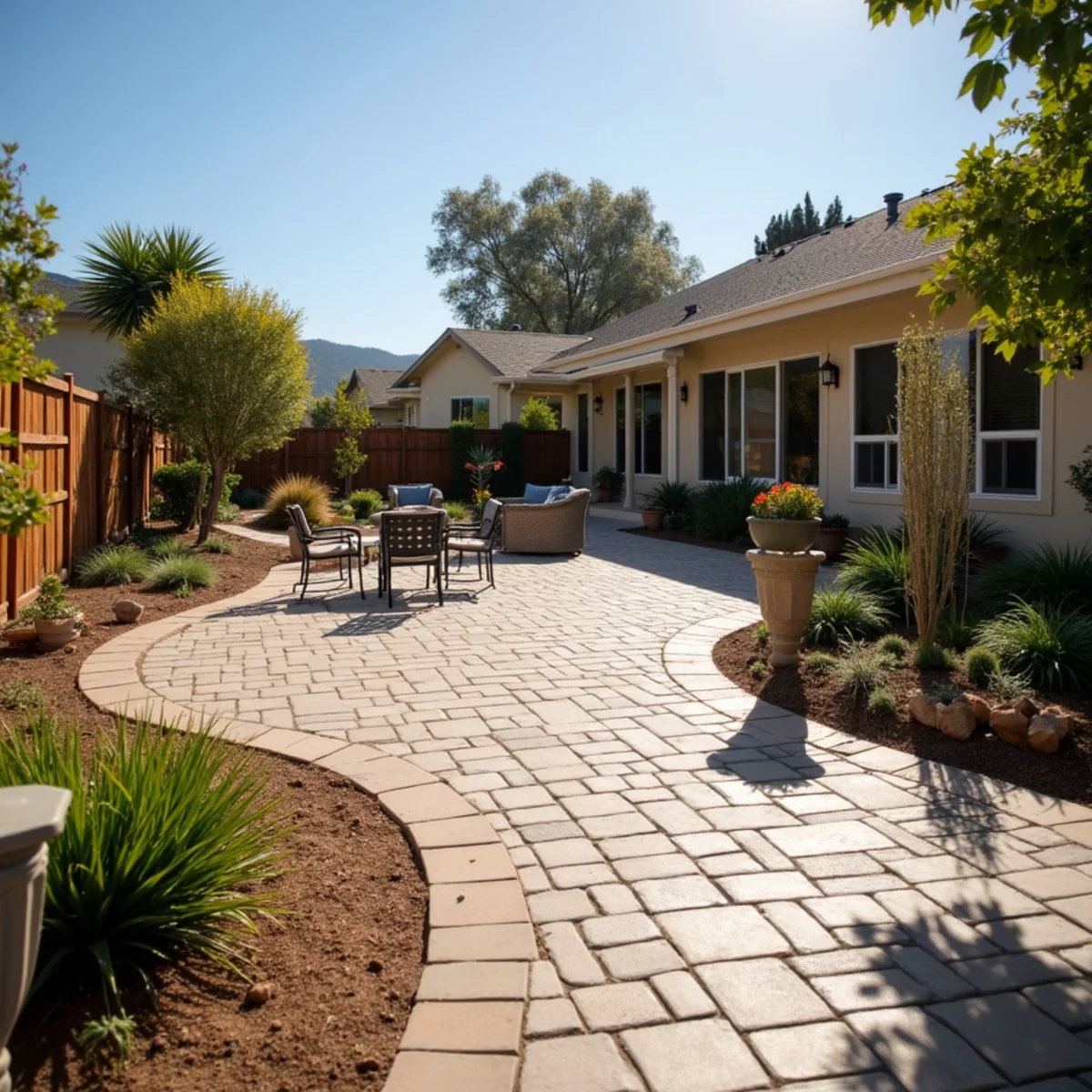
A paver patio is one of the best-value additions you can make to a Central Coast home. Done right, it adds usable outdoor living space that holds up for decades in our climate and does not need the watering a lawn does. The catch is that patio pricing is all over the map, and a bid that looks cheap on paper often hides the corners that make the difference between a patio that lasts and one that heaves in three years.
This guide gives you real 2026 numbers for San Luis Obispo County, explains what actually drives the price, and shows you where the cheap bids cut. Every project is different, so use these ranges to build a mental model, then get a specific quote for your yard.
The Honest Price Range
For a professionally installed paver patio on the Central Coast in 2026, most projects land somewhere in the range of $18 to $40 per square foot installed, with the majority of standard residential jobs falling in the $22 to $32 band. A simple 300-square-foot patio in a basic concrete paver, on flat and accessible ground, sits near the bottom. A larger patio in premium natural stone, on a slope, with cuts and curves and a seat wall, climbs toward the top and past it.
Where the Money Actually Goes
Homeowners tend to focus on the pavers themselves, but the paver is often the smaller part of the cost. The larger part is what you never see: excavation, base, and edge restraint. A patio is only as good as the base under it, and on the Central Coast that base has to account for our soils, which range from sandy near the coast to expansive clay inland.
- Excavation and haul-off of the old surface and soil.
- A compacted aggregate base, typically several inches deep, built in lifts.
- Bedding sand and precise screeding for a level, stable surface.
- The pavers themselves, plus cuts for borders and curves.
- Edge restraint, polymeric sand joints, and compaction to lock it all in.
When a bid comes in dramatically low, the base is almost always where it was shaved. A skimpy base or a base laid over poorly compacted soil is why patios settle, rock, and pop joints within a few seasons. Our hardscape, patio, and paver work treats the base as the project, because the pavers on top are the easy part.
Material Choices and What They Cost
Material is the lever most under your control. Concrete pavers are the workhorse: durable, huge range of styles, and the most budget-friendly. Porcelain pavers cost more but resist stains and fading beautifully. Natural stone such as flagstone or travertine sits at the top for both cost and character. Each performs differently underfoot and under our coastal sun, and the right pick depends on how you will use the space.
A Note on Our Coastal Climate
The Central Coast is gentle on hardscape compared to freeze-thaw regions, which works in your favor. We do not get the deep frost heave that cracks patios in cold climates. What we do get is salt air near the coast and intense sun inland, so material choice should account for fading and, near the water, for how a surface handles moisture and salt. Proper drainage still matters everywhere, because our winter storms come hard and fast.
Add-Ons That Change the Budget
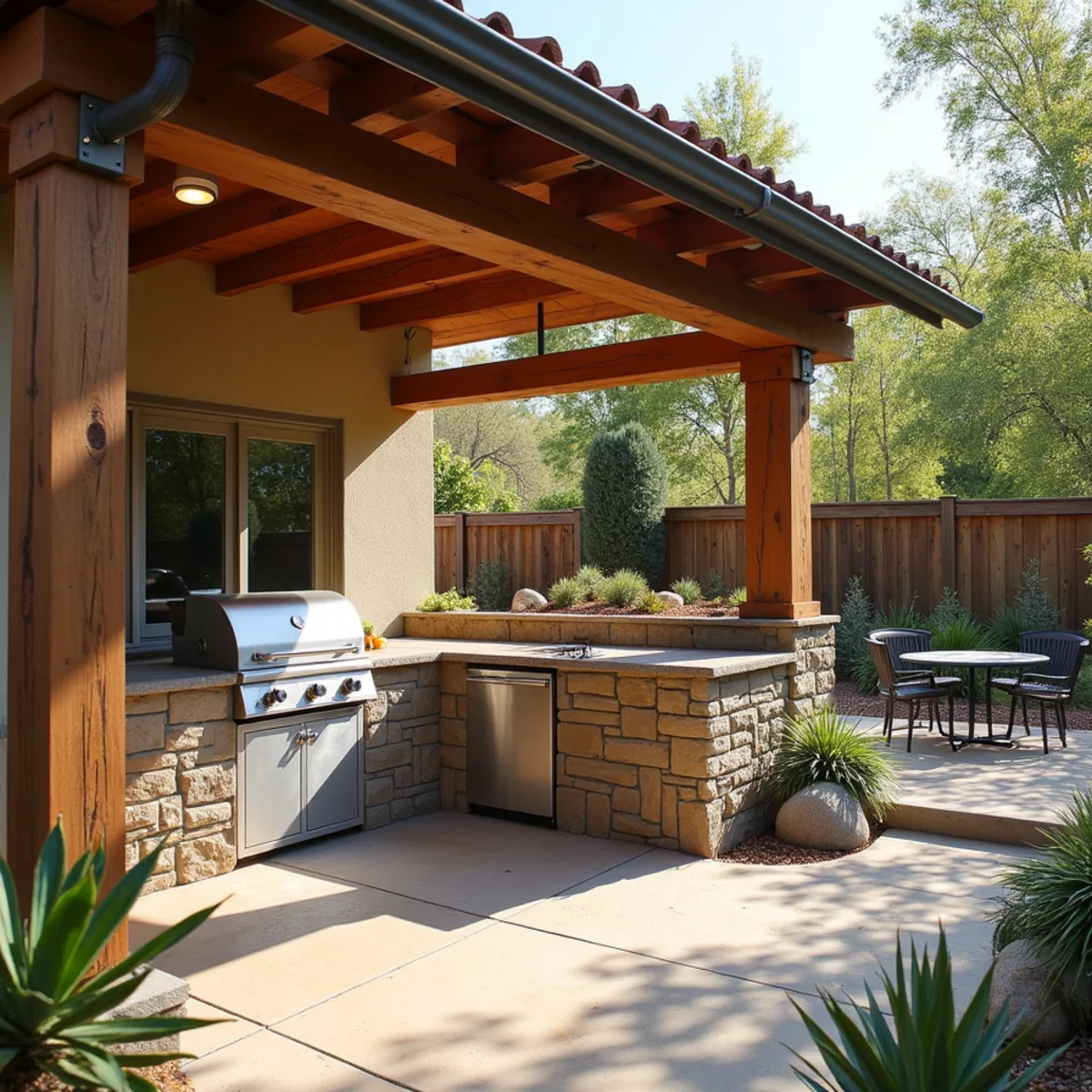
A flat patio is the baseline. The features that make a patio feel finished also move the number. A seat wall or low retaining wall adds both cost and usable seating. Steps and multiple levels add labor. Integrated lighting, a fire feature, or a built-in grill turn a patio into an outdoor room and a bigger budget. There is no wrong answer here, only trade-offs, and it is worth deciding up front how far you want to take it so the base and drainage are built for the final vision.
Homeowners in our Arroyo Grande service area often start with a patio and later add an outdoor kitchen or fire feature, which is why we plan the layout and utilities for what might come next. If an outdoor kitchen is on your wish list, our guide on outdoor kitchen costs on the Central Coast breaks down that budget separately.
How to Read a Paver Patio Bid
When you compare quotes, do not just compare bottom lines. Look at what each bid says about base depth, compaction, edge restraint, and drainage. A quote that spells those out is describing a patio that lasts. A quote that only lists square footage and a paver style is hiding the parts that matter. Ask directly how deep the base is and how it will be compacted, and you will quickly tell the careful builders from the fast ones.
If you are ready to put a real number to your patio, we will measure the space, assess the soil and drainage, and give you a clear quote with no hidden base surprises. Call Kestrel Landscapes at (323) 606-0255 for a free assessment across San Luis Obispo County, and we will help you build a patio that is still flat in twenty years.
Frequently asked questions
Most professionally installed paver patios run $18 to $40 per square foot installed, with typical residential jobs in the $22 to $32 range. Material, site access, base work, and add-ons like seat walls move the number within and beyond that band.
Almost always because the base was shaved. A proper patio needs several inches of compacted aggregate base built in lifts. Cheap bids cut base depth or skip compaction, which is why those patios settle, rock, and pop joints within a few seasons.
Pavers flex with ground movement and can be lifted and reset individually if something settles, while a concrete slab cracks in one piece. On the Central Coast's varied soils, that repairability is a real advantage, though concrete can be the cheaper upfront option.
Want this handled for your property?
Get a free on-site assessment from a Los Osos design-build crew. Based in Los Osos — most SLO County assessments scheduled within 48 hours.