Problem-Solving • 8 min read
Fire-Resistant Fencing Materials: What Actually Survives Ember Exposure
A wood fence is a wick that runs straight to your house. Here is what really resists embers, and how to detail the last five feet.
By Kestrel Landscapes · Published May 5, 2026
In a wind-driven fire, most homes are not lost to a wall of flame. They are lost to embers — burning fragments carried ahead of the fire that land on something combustible and catch. A wood fence attached to your house is one of the most overlooked ways those embers get to your siding. It is a continuous fuse running from the property line straight to the structure, and it burns hot and long once lit.
This matters everywhere in the wildland-urban interface, and it matters a lot in a pine-shaded town like Cambria where homes sit close together among mature trees. If you are rethinking a fence, or replacing one that finally gave out, this is the moment to choose materials that resist embers instead of feeding them. Kestrel Landscapes handles both the fence installation and the surrounding fuel work, so the fence and the ground around it are treated as one system.
Why wood fences are such a liability
Old wood fencing is dried out, often has a gap-filled base collecting leaf litter, and connects directly to the house. Embers lodge in the gaps, the pickets ignite, and the fence carries fire along its length until it reaches the wall. Even a fence that survives can channel enough heat to crack a window or ignite siding. Vinyl is not the answer either — it does not spread flame like wood, but it melts and deforms in radiant heat, and it can drip.
What actually resists embers
The materials that hold up share one trait: they do not sustain combustion. Ranked roughly by how they perform under ember and heat exposure:
- Metal — steel or aluminum panels, tubular fencing, and welded wire are non-combustible and the safest choice near the house.
- Masonry and concrete — block or poured walls do not burn and also block radiant heat, though they cost more.
- Composite rated for fire — some fiber-cement and mineral composite products resist ignition; check the manufacturer's fire rating.
- Wood, only well away from the structure — if you want the look of wood, keep it at the far edge of the lot, not touching the house.
The detail most people get wrong: the connection
You do not have to rip out an entire back fence to make a real difference. The highest-value fix is the connection where the fence meets the house. Replace the wooden section in that last stretch with a metal gate or a masonry pier, and you break the fuse. Embers may still land on the far fence, but they no longer have an unbroken path to your siding. We often do exactly this — keep serviceable fencing at the perimeter and swap only the vulnerable connection to non-combustible material.
The ground around the fence matters too
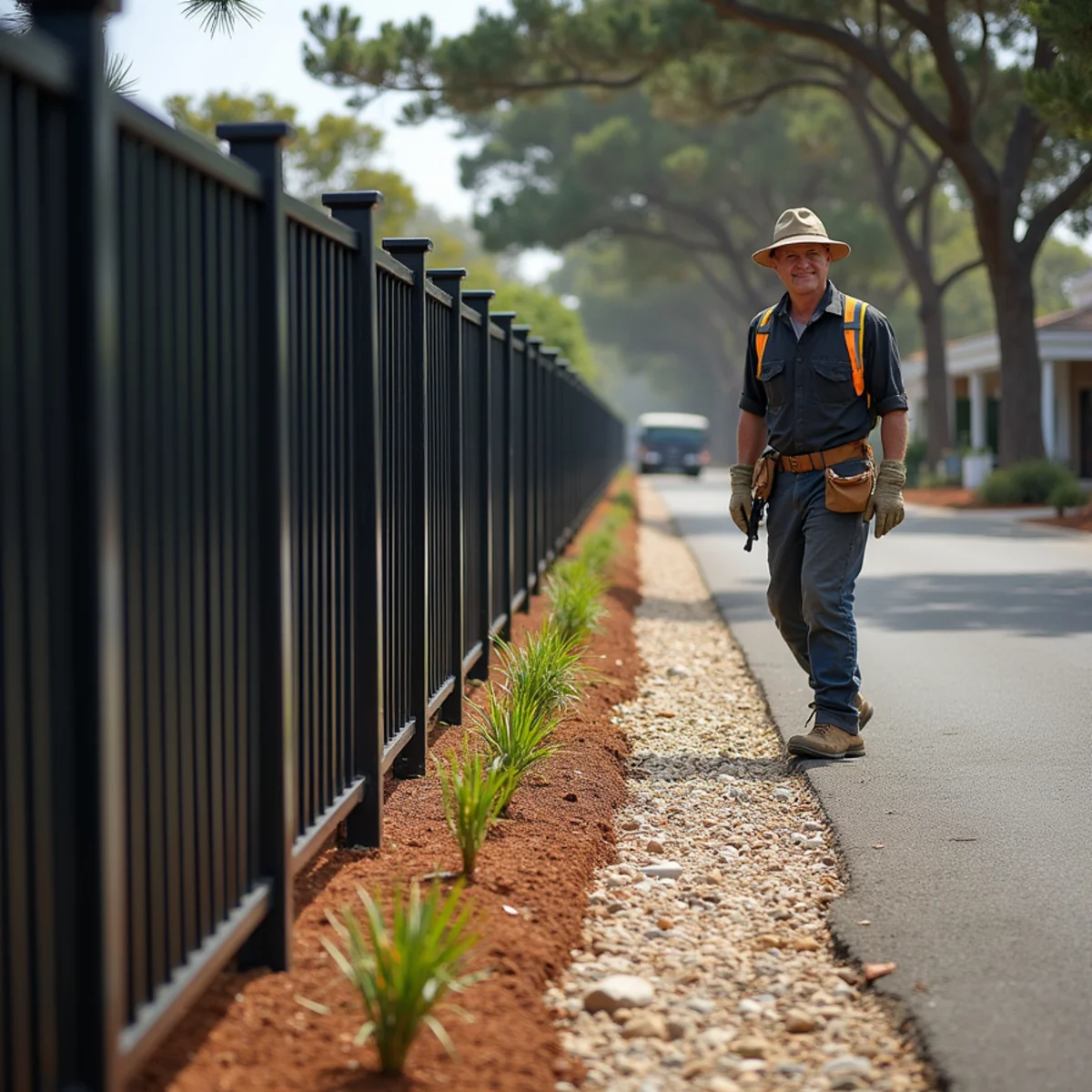
A metal fence sitting in a bed of dry mulch and weeds still has a fire problem, because the ground is doing the burning. This is where fencing overlaps with defensible space clearing. Along the fence line and especially in Zone 0, we replace bark mulch with gravel or a non-combustible ground cover, pull the weeds and dead grass that accumulate at the base, and keep overhanging branches off the top rail. A clean, mineral strip along the fence gives embers nothing to catch on.
Plant choice near the fence counts as well. High-moisture, low-resin plants spaced with gaps resist ignition; a row of dry, oily shrubs against a fence is a ladder for fire. If deer pressure is pushing you toward a solid wood fence for protection, our guide to deer-resistant plants and fencing on the Central Coast covers how to get the browsing protection without the fire fuel.
A practical plan for most homes
- Replace the fence-to-house connection with metal or masonry so nothing combustible touches the structure.
- Keep the first five feet around the home free of wood fencing, wood mulch, and dense plantings.
- Clear leaf litter and weeds from the base of the entire fence line before every fire season.
- Where you replace full runs, choose steel, aluminum, or a fire-rated composite over wood or vinyl.
- Trim tree limbs so they do not overhang or rest on the fence.
Fire-smart fencing does not mean giving up privacy or curb appeal — metal and composite come in styles that look nothing like a chain-link lot line. It means the barrier around your home works for you in a fire instead of against you. If you want a fence plan that survives ember exposure and ties into your defensible space, call Kestrel Landscapes at (323) 606-0255 for a free assessment, and we will walk the property line with you.
Frequently asked questions
Usually not. The most important fix is replacing the section that connects to the house with non-combustible material, so fire cannot travel the fence to your siding. Perimeter fencing farther from the home is lower risk.
No. Vinyl does not spread flame like wood, but it softens, melts, and deforms under radiant heat and can fail early in a fire. Metal or masonry is the safer choice near the structure.
A non-combustible strip — gravel or bare mineral soil — rather than bark mulch or dry weeds. Keeping that base clean each year removes the fuel that lets embers ignite the fence.
Want this handled for your property?
Get a free on-site assessment from a Los Osos design-build crew. Based in Los Osos — most SLO County assessments scheduled within 48 hours.